No. 2 · Concertina
A Tenner, a Concertina and a Harmonica
A £10 concertina, a charity-shop harmonica, and the first bodge in a longer project.
This journey started back in March 2024, walking past a vintage junk shop when a battered and broken concertina caught my eye.
For the low sum of £10 it could be mine. I had no idea how to play it, no idea if it worked and, if not, no idea how to fix it. But like all these projects, that was no reason not to give it a go.
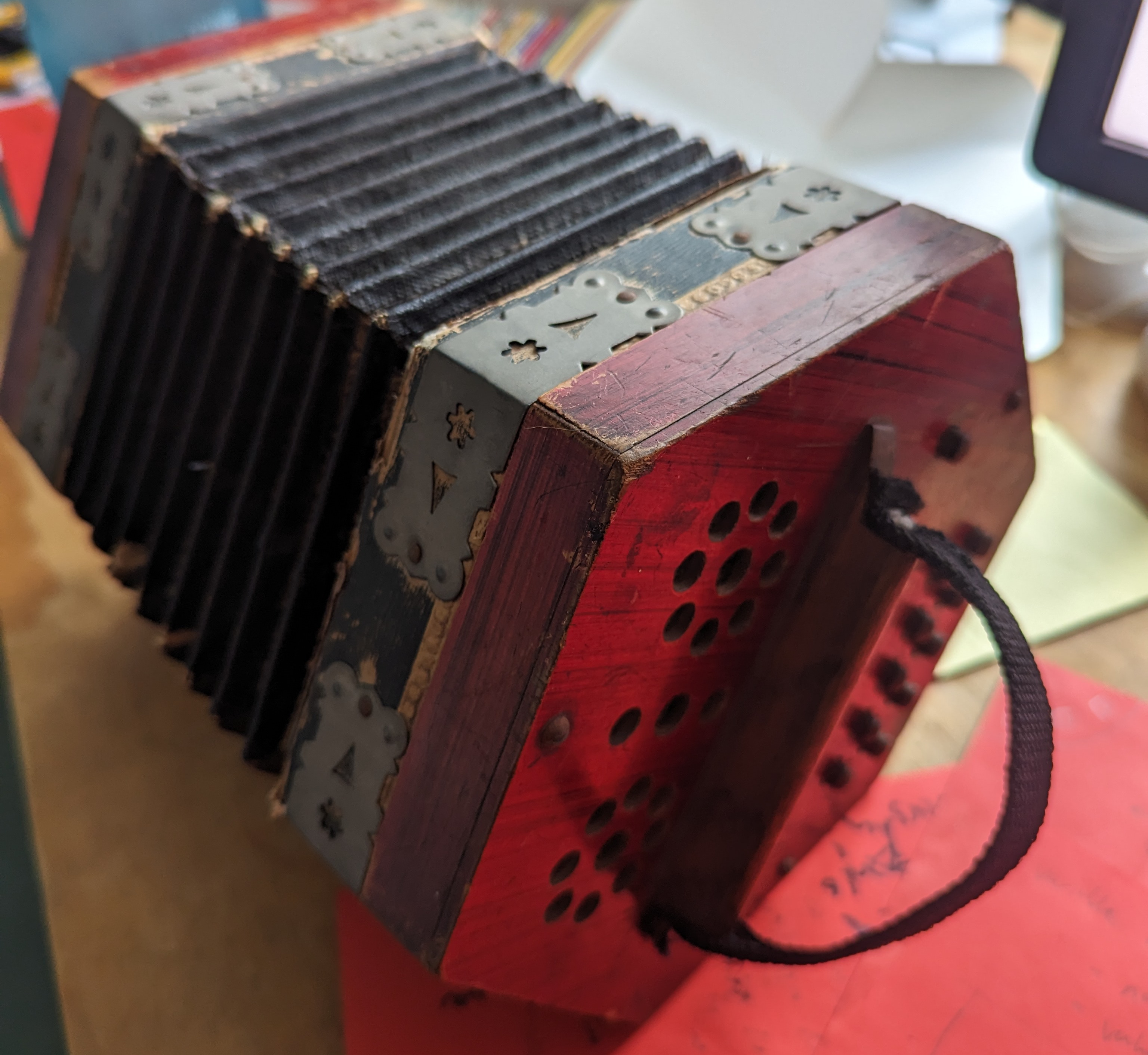
It came home with me and within a few minutes I’d forced out a rendition of Twinkle Twinkle with only a few missing notes. It was evident at this point that not only was it badly out of tune, but it was missing some of the reeds completely, and the bellows were leaking like a sieve.
After a little coaxing and fiddling with some very rusty screws, I’d opened up the body of the concertina and saw some snapped reeds, fairly obvious holes and a lot of dust.
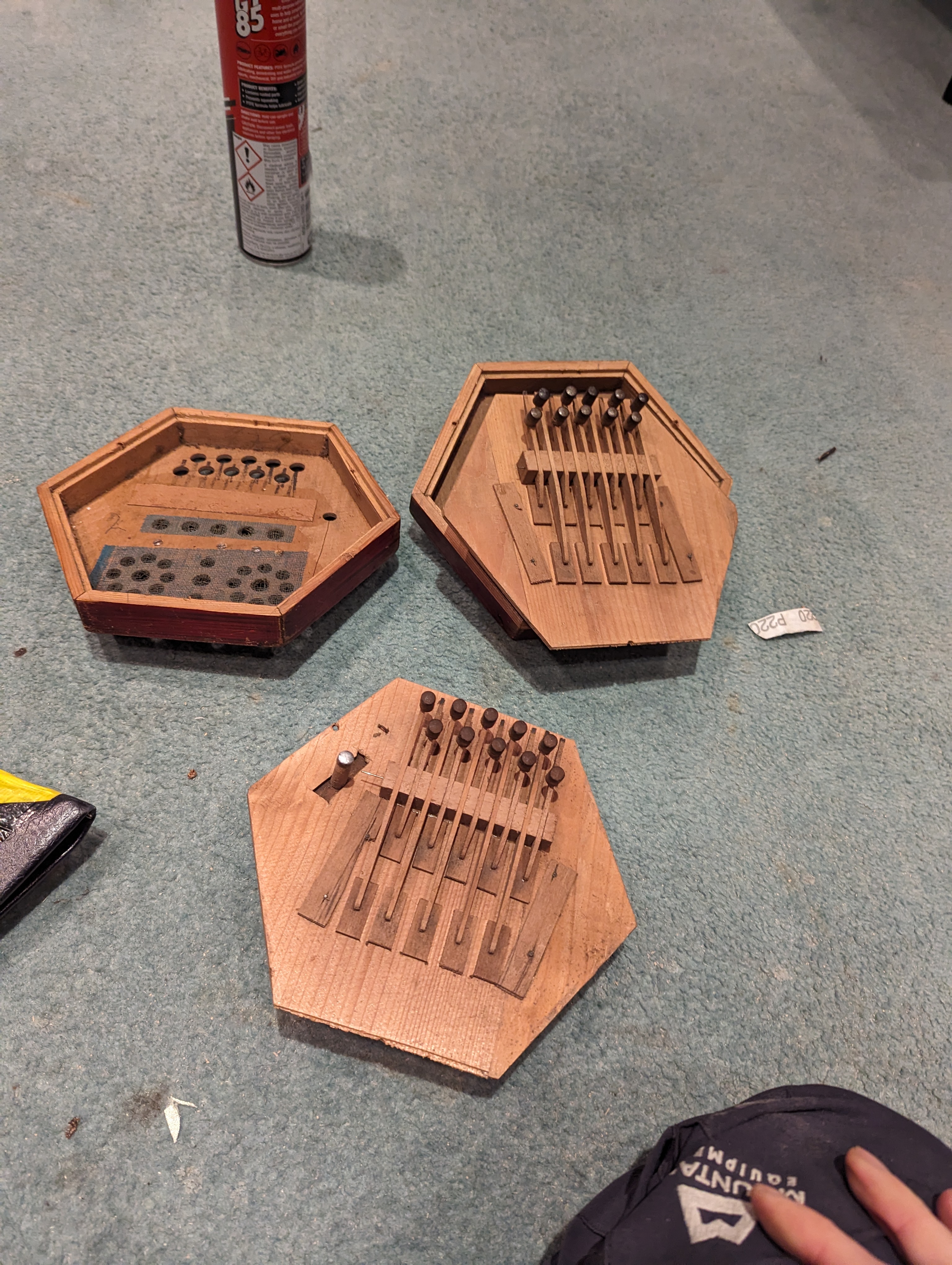
Enter bodge #1.
What was I to do about these missing reeds? A quick Google search made it clear this was going to spiral from a fun little project into a significant investment of time and, more importantly, money. All I wanted at this point was to bash out a full version of Twinkle Twinkle Little Star or Hot Cross Buns, with all the notes.
If I couldn’t feasibly get concertina reeds, what else could I use? I looked around the house and came across my old harmonica. I thought to myself, huh, that uses reeds, and they look pretty similar. How different can they be? (Turns out, a bit.)
Anyway, rather than destroying my reasonable-quality harmonica and ending up with two broken instruments, I found a harmonica in a charity shop for £1 and quickly got to work dismantling it.
The reed plate was one solid piece with the metal reeds attached by a pin. On the concertina, the reeds were small metal plates held in a wooden frame. So far, so simple: just chop up the reed plate of the harmonica and replace the missing bits with ones that match the note I’m missing.
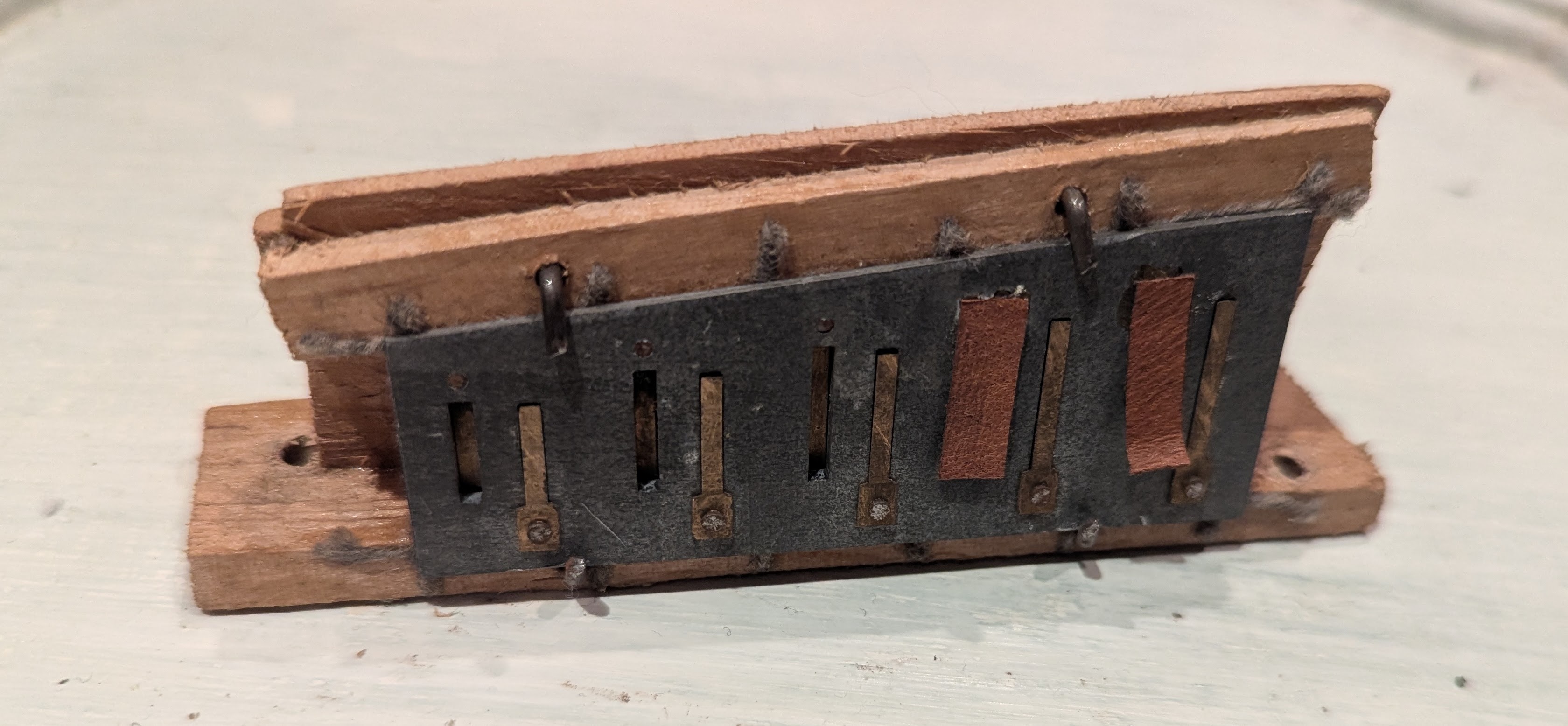
I’m sure anyone who knows anything about concertinas is now screaming at the screen with all the reasons this is a bad idea, but this is a bodge. My aim is not to restore this to a quality performance instrument, but, as always, to see if I could get close at minimal cost and with what I have lying around or easily available. I wasn’t going to shell out a few hundred quid, or wait weeks for a shipment of reeds.
So chop up I did.
After a lot of blowing through small sharp bits of metal to find the right notes, I secured the reeds in place and put the whole concertina back together. I gave old faithful Twinkle Twinkle another bash and, although all the notes were there, the tuning still had something to be desired.
A bit more research and reading of some very helpful Reddit posts and I found that to raise the pitch I had to remove some of the material from the end of the reed, and to lower the pitch I had to add some. Again, it seemed simple enough. For all the flat notes I filed off a little metal at a time and used a tuning app on my phone to check. For all the sharp notes I added a little metal by melting a little solder to the tip of the reed, then tweaked by adding and removing until the note was right.
And hey presto, a semi-working concertina. All the notes there, all in tune. The only problem was that too much pressure in the bellows made them strain. Obviously the harmonica reeds were never intended for the pressure provided by a set of concertina bellows.
A sand down of the horrible red paint, some cardboard and glue to bodge the holes in the bellows, an old belt for some new hand straps and some decorative pyrography: it could almost pass as a usable instrument.
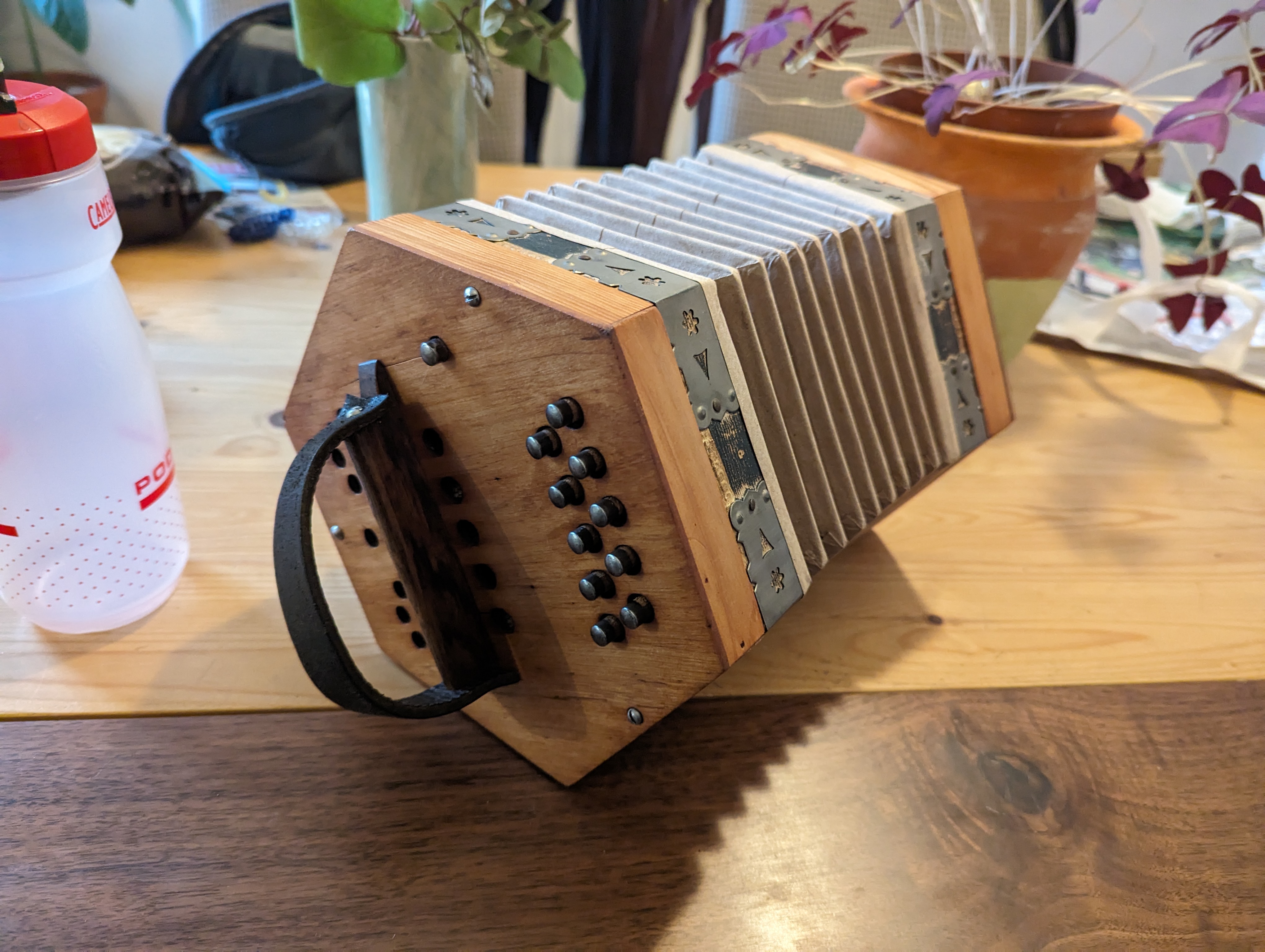
And this is where my interest died. The project was done for now. I could get a tune out of it and enjoyed the process and the bodges along the way. Now it was working, it did a good job of sitting on my shelf for a few years until it came to life again in another bodge project.
What was the point?
It was never going to be a proper restoration, and that was fine. I had fun figuring out how to get it playing, learned a bit about concertina reeds, and ended up with something that could just about manage Twinkle Twinkle. That’s usually enough of a point for me. As I wrote in Why Do I Bodge?, the project itself is often the point.
That second project started when I bought an electric piano and discovered MIDI. The concertina was about to acquire buttons, a microcontroller and an entirely different set of problems. The next part picks up there.